

The Flyers blogs are powered by Phans of Philly, by Lights On Electric, by New Balance of Mount Laurel, by Cover All Exteriors, by Summit Public Adjusters and our newest sponsors, The Mens and Boys Store and Carl’s Cards and Collectibles.
The Philadelphia Flyers are a mess as they head into the Olympic break. Their 6-3 loss to the Boston Bruins was their third in a row and their seventh in their last nine games. With the Flyers sliding into seventh in the Metropolitan Division and the second-worst record in the Eastern Conference, the playoffs seem far away, even if they are only 10 points out of a wild card spot.
The question is what comes next. Initially, the Flyers wanted the answer to that question to be a buy-in, where they made a push for the playoffs. Now, they are in a similar spot to the previous seasons and look more like sellers. Maybe that’s a good thing in the end?

Related: Flyers vs. Blue Jackets: The Good, the Bad and the Ugly
The timing for this slump comes just after the Christian Dvorak extension. They gave him that deal on Jan. 5 to signal that they are ready to compete and not only secure a playoff spot but end the rebuild. The recent stretch suggests otherwise and forces general manager (GM) Daniel Briere and the front office to pivot.
Dvorak’s Contract Signaled Buy-in or Big-Picture Change
When the Flyers gave Dvorak the five-year extension, it showed they wanted to secure a key part of their roster. Dvorak is a middle-six center who plays in all situations and, at 29, will play his prime with the team. The other reasons the Flyers made this move are that they don’t have confidence in the pipeline, and there aren’t any core centers on the way any time soon.
The latter option is a concern because it shows the shortcomings of a rebuild that’s been years in the works. It means that the Flyers had to sign Dvorak, not knowing whether they had the center to replace him. If Jett Luchanko isn’t the answer and Jack Nesbitt, whom the Flyers traded up to select in the first round of the latest draft, isn’t either, this rebuild is in trouble.
The Flyers have limited options to add centers, and they were forced into this move. With the team struggling and the playoffs looking further away each day, there aren’t a lot of moves out to improve this team. In hindsight, if the front office knew this team wouldn’t make the playoffs, which all signs point to, they would trade Dvorak to keep building up the farm system or, more importantly, add young NHL talent. Now, they are stuck with more veterans on a roster that isn’t built to compete.

Where Flyers Can Benefit From Selling
Unless multiple players on the Flyers remove their no-trade clauses, the only two trade candidates are Owen Tippett and Rasmus Ristolainen (Cam York also doesn’t have a no-move clause but is a key part of the future). Ristolainen’s value is down but Tippett can still bring in a few more prospects.
But that leads to the other issue that the Flyers have. They have prospects on top of prospects. Specifically, they have wingers on top of wingers. Now, this would be a good problem to have if they were a contending team, as they could trade Alex Bump or Nikita Grebenkin to add to the NHL team. The Flyers aren’t in that spot and won’t be even if they turn things around.
That said, the Flyers can still benefit from selling. It’s about helping the prospect pool and opening the door for the future, which is a possibility if they move multiple veterans.

Tocchet Can Let The Kids Play
Rick Tocchet has said multiple times that he’s looking to find opportunities to get players more ice time. Many point to Matvei Michkov’s decreased role and Tocchet’s urge to roll out four lines as a counter to that.
However, he’s played Denver Barkey throughout the lineup to find out how good he is, and similarly, Grebenkin is finally getting a shot, with the latest game against the Boston Bruins being a step in the right direction. The veterans take up those roster spots, and trading them opens things up for the younger players to take on big roles and run with them.
The catch is that prospects need time to develop, and throwing them into the NHL usually doesn’t work out. The Flyers wouldn’t want to rush players to the NHL, especially Porter Martone, who can get a cup of coffee late in the season but ideally, avoids it. The good news with selling is that it allows the Flyers to identify their core.
Which players can be in the top six someday? Can they play at a high level in the NHL, or can they still develop in the American Hockey League (AHL) before turning into regulars? This team will find out all of this if things keep trending this way and the losses keep piling up.


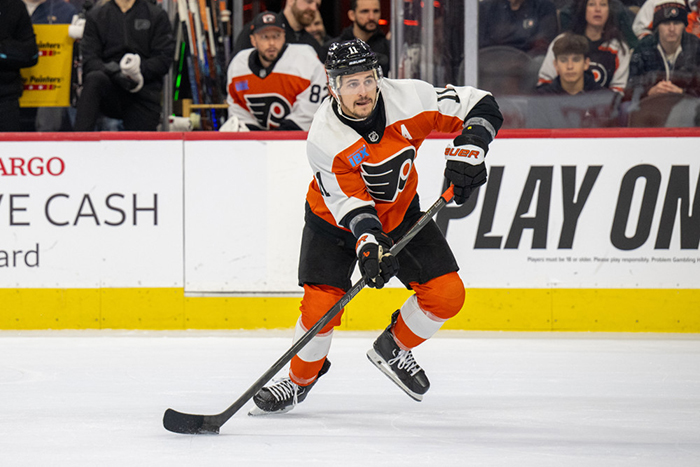

Dvorak is a middle-six center who plays in all situations and, at 29, will play his prime with the team.
——
Prime for forwards is 27-29. Dvo will be 30 when the extension kicks in. Congratulations, the Flyers bought a declining asset at peak value. No take backs.
https://medium.com/@mattdesfosses/the-hockey-aging-curve-b0f33b91d1e4
I’ll post more after this is in the Flyers thread but there does seem to be a few misconceptions.
Most players start to really fall off in their 30s, and recently, we’ve seen players aging well and still playing at a high level into their late 30s. The Flyers are hoping that’s the case with Dvorak but it’s a risk to take.
The real issue is that the Flyers didn’t have an alternative at the position, and with their hands tied, they wanted to keep him around to know they had an option.
All the best!