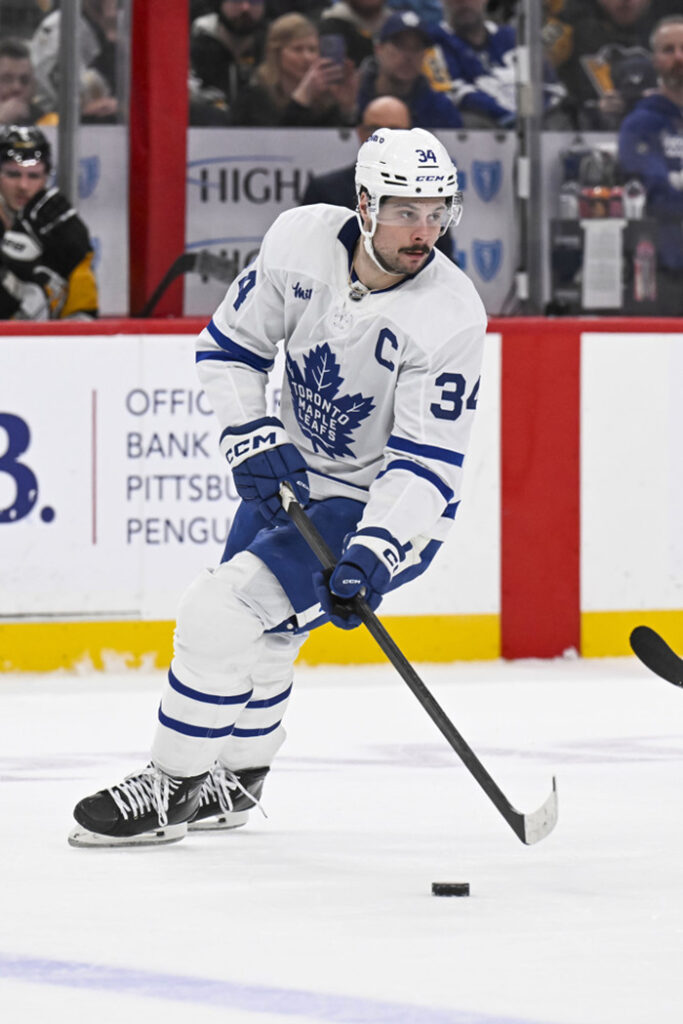
The Toronto Maple Leafs will be out of action for more than two weeks, with the exception of team captain Auston Matthews, winger William Nylander, and defenseman Oliver Ekman-Larsson, who are making their way to Italy for the Winter Olympic hockey tournament, beginning next Wednesday. While their teammates are likely headed to someplace sunny and warm, the work is just beginning for GM Brad Treliving, who will have less than two weeks to work with between the roster freeze being lifted and the NHL trade deadline on March 6.
The Leafs, according to a variety of insiders, are in a posture of being sellers but more towards a quick reset and retool instead of a full rebuild. As it has been made clear from recent columns and various podcast appearances, my point of view is that the “tear it down to the studs” rebuild would be asinine, since the three main cogs at forward: Matthews, Nylander, and Matthew Knies, are all locked up for multiple years and are all under the age of 30, and both Matthews and Nylanders have full no-move clauses that would make it impossible for Toronto to get an equal return in a trade.
The retool would require a strategic selling off of assets for a maximum return before the deadline, including rental players, and players with term at positions where the Leafs have depth. We will take a look at each position on the roster and evaluate what Treliving could be prepared to do.
Defense
The Toronto story on the blueline has decompensated since the beginning of the season, with the injuries to Chris Tanev and Brandon Carlo being the first dominoes to fall. After an upper-body injury in Philadelphia on November 1, the shutdown blueliner returned just before Christmas before suffering a serious groin injury that may be season-ending. Carlo suffered a foot injury in November and put off surgery until early December, but after returning in early January has played well.
The waiver claim of Troy Stecher has been one of the few moves that Treliving has made, and it has been beneficial, since it prevents the likes of Philippe Myers from getting in the lineup on most nights. The issue for the Leafs is that their blueline is long in the tooth, and with them not competing for a playoff spot and without many assets in terms of draft capital and prospects, Toronto has to consider trading off one or more of their blueliners to recoup some assets.
The future of Morgan Rielly has been a focal point of the fanbase, as the 31-year-old’s performance has declined this season, but his situation is not easily solvable and likely not to change, no matter how many wish it would. The Leafs reportedly approached the longest tenured Leaf last summer to see if he was interested in waiving his no-movement clause and playing elsewhere, and he said no to both. There is no reason to believe that either has changed. The club benching him or forcing him out in some way are pure fantasy and if they weren’t, doing so would scar Toronto’s reputation with future prospective free agents.
The solution for Rielly is simple. He is no longer a 20+ minute a night defenseman, and head coach Craig Berube using him as a top pairing blueliner does not do him or the Leafs any favors. Rielly needs to adapt his game and not take as many offensive chances as a second-pairing defenseman playing less than 20 minutes per night. If he does not want to leave Toronto, and management does not feel that he can make that adjustment, then the only face-saving move would to buy Rielly out of the final four years of his contract.
If they do that, the club would open up $4 million in cap space for the remaining four years of his deal, but they would incur a $2 million cap hit for four years after that (2030 to 2033). The problem with the buyout is that there are no defensemen on the free agent market, and if there were, they would cost more than $4 million.
Jake McCabe has a full no-trade clause for this and next season, and there have been no indications that Toronto wants to move him. Stecher (a pending UFA making $787,500) and Simon Benoit ($1.35 million signed through next season) are low-priced, which might be of interest to contenders with limited cap space, but the return for both would likely be mid-round picks. Others like Myers or Henry Thrun might attract mid-to-late round picks, but if Treliving is intent on moving out other blueliners, they will need someone to play NHL minutes for the final five weeks of the regular season.
Next – Part 2 – What to do with OEL and Carlo