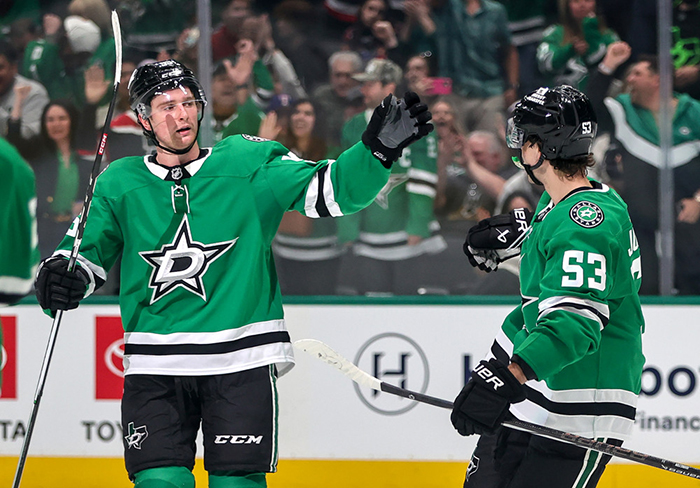
Jonathan Toews returns to the United Center tonight wearing a Winnipeg Jets jersey, a moment that transcends the standings and taps directly into Chicago Blackhawks history. After 15 seasons with the organization, Toews steps back onto Chicago ice not as a villain to be booed, but as a captain to be honored.
His return is a reminder of what he represented to the franchise — the leader, the standard-setter, and the emotional bridge between the team and the city during one of the most successful eras in modern NHL history. Three Stanley Cups. A generation of fans. One captain.
Fifteen Years, One Franchise, One Captain
Drafted third overall by the Chicago Blackhawks in the 2006 NHL Draft, Jonathan Toews arrived already viewed as a future leader. Before turning pro, he spent two seasons at the University of North Dakota, where his mature two-way game and leadership qualities stood out against older competition.
What followed was a rarity in today’s NHL: a 15-season career spent entirely with one franchise. Over 1,067 games in a Blackhawks uniform, Toews recorded 372 goals, 511 assists, and 883 points — numbers built not just on offense, but responsibility.
Named captain in 2008 at just 20 years old, Toews became the youngest captain in NHL history at the time. He went on to serve as the longest-tenured captain in Blackhawks history, guiding the organization through its most dominant era.
Since his departure, no player has worn the captain’s “C” in Chicago — a quiet but telling reflection of how closely the role remains tied to Toews. His legacy points toward an eventual jersey retirement and long-term Hall of Fame consideration.
Leadership on the International Stage
Toews’ leadership extended far beyond the NHL. Wearing an “A” for Team Canada, he represented his country at the highest levels of international hockey.
He competed twice at the World Junior Championship, serving as an alternate captain and earning a reputation as a dependable two-way center in pressure situations. At the senior level, Toews represented Canada at:
- Two Olympic Games (winning gold both times)
- One World Championship
- One World Cup of Hockey
In short tournaments and elimination games alike, Toews brought the same traits that defined his NHL career — structure, intelligence, and composure. His international résumé reinforced his status as one of Canada’s most trusted players of his generation.
The Core of a Championship Machine
During Chicago’s championship window, Jonathan Toews stood at the center of a core that came within inches of dynasty status. Three Stanley Cups (2010, 2013, 2015) in a six-year span didn’t happen by accident — they were built on structure, accountability, and a clear identity. Toews was the heartbeat of that identity.
Alongside Patrick Kane, Duncan Keith, Brent Seabrook, Marian Hossa, and Corey Crawford, Toews was the connective force. Every great team needs a stabilizer — the player coaches trust when the game tightens, when the crowd gets loud, and when mistakes can’t happen. In Chicago, that player was always Toews.
While Kane brought offensive brilliance and Keith controlled tempo from the blue line, Toews took on the hardest assignments every single night. He started shifts in the defensive zone, matched up against the league’s best centers, took critical faceoffs late in games, and was the first forward over the boards when protecting a lead. His value wasn’t measured only in points — it was measured in control.
Under Joel Quenneville, Chicago’s system demanded discipline and buy-in. Toews was the standard. His preparation, practice habits, and in-game details set the tone for the entire roster. Younger players learned quickly that there was a “Toews way” to play: manage the puck, win your battles, track back hard, and make the smart play before the flashy one.
The Kane–Toews duo became one of the defining partnerships of the modern NHL. They didn’t just complement each other — they balanced the team. Kane could attack freely because Toews handled the defensive responsibility. That balance allowed Chicago to roll lines, dominate possession, and overwhelm opponents over long playoff series.
During deep playoff runs, when space disappeared and games turned into wars of attrition, Toews’ impact became even more obvious. He didn’t fade — he elevated. Whether it was key goals, momentum-shifting shifts, or shutting down an opponent’s top line, Toews delivered when the margin for error was razor thin.
Chicago wasn’t just talented — it was connected. That connection flowed through Toews. He was the captain who didn’t need speeches every night, the leader who led by example, and the constant presence that allowed a star-heavy roster to function as a complete, championship-level machine.
Three Stanley Cups, One Constant
The Blackhawks’ Stanley Cup wins in 2010, 2013, and 2015 shared one constant — Jonathan Toews wearing the “C.”
- 2010: Led Chicago in playoff scoring and won the Conn Smythe Trophy, ending the franchise’s 49-year Stanley Cup drought.
- 2013: Captured the Selke Trophy while dominating possession during one of the most complete playoff runs in modern NHL history.
- 2015: As the roster evolved, Toews remained the stabilizing force, guiding Chicago to a third championship in six seasons.
When the stakes were highest, Toews’ game elevated — the defining trait of elite postseason leadership.
A True 200-Foot Center
Jonathan Toews was never defined by raw scoring totals — and that was never the point. Over 15 NHL seasons, he built his reputation as one of the league’s most complete and dependable centers, a player whose impact was felt in every zone and on every shift.
Night after night, Toews lined up against the best players in the world. Whether it was Patrice Bergeron, Aleksander Barkov, Anze Kopitar, or Sidney Crosby, he took the toughest matchups without complaint. Defensive-zone starts, shutdown assignments, late-game leads — those responsibilities didn’t rotate through the lineup. They stayed with Toews.
He consistently ranked among the NHL’s most reliable faceoff men and was trusted in the most difficult moments of a game. When chaos hit — a defensive-zone draw with one minute left, protecting a one-goal lead — coaches leaned on Toews to win possession, slow the game down, and push play back in the right direction.
His game was built on positioning, anticipation, and discipline. Toews didn’t chase plays — he arrived early. His hockey IQ was off the charts, often reading plays before they developed. He closed gaps quickly, supported his defensemen low in the zone, disrupted passing lanes, and turned defense into offense through smart, efficient decisions.
There’s a reason the Selke Trophy conversation felt incomplete without his name for nearly a decade. Even in seasons when he didn’t win it, the standard of the award reflected Toews’ style of play. Many of today’s elite two-way centers, including Bergeron and Barkov, have openly mirrored elements of the game Toews helped define.
What made Toews special wasn’t flash — it was reliability. Shift after shift, game after game, season after season, he played the game the right way. Coaches trusted him, teammates followed him, and opponents respected him.
That consistency is what made Jonathan Toews the definition of a true 200-foot center.
Smart Offense, Not Flash
Toews was never a 40-goal scorer, and he didn’t need to be. He recorded three 30-goal seasons, topped out below 35 goals, and reached 80 points once during his prime.
What separated him from pure scorers was how his offense was generated. Toews relied on hockey IQ, timing, and vision. He found soft areas, made quick reads, and elevated linemates through intelligent puck distribution.
Many of his biggest goals came at defining moments — opening goals, tying goals, and playoff goals when time and space disappeared.
Hockey IQ That Drove Winning
Perhaps Jonathan Toews’ greatest asset was his hockey sense — an elite ability to read the game one step ahead of everyone else on the ice. He understood instinctively when to push the pace, when to absorb pressure, and when to simplify the game to protect a lead. Those decisions rarely made highlight reels, but they decided outcomes.
That intelligence turned Toews into a coach on the ice. He anticipated breakdowns before they happened, adjusted positioning on the fly, and stabilized shifts that could have unraveled. Linemates benefited from his communication and awareness, while younger players learned simply by sharing a line with him. He controlled games without needing to dominate the puck — a subtle, demanding skill that became a defining element of Chicago’s identity during its championship years.
Toews didn’t chase the game. He guided it. And in playoff hockey, that awareness often mattered more than raw production.
Consistency Over Stardom
Across 15 seasons in Chicago, Toews delivered the same reliable, structured game night after night. He didn’t rely on hot streaks or individual flair to define his impact. Instead, he brought accountability, discipline, and calm — the traits that sustain winning teams when pressure is at its highest.
While others carried star personas or drove the spectacle, Toews carried responsibility. He absorbed the hardest matchups, set the competitive standard internally, and ensured that Chicago’s success never drifted from its foundation. Even as his role evolved later in his career, his influence never faded. Whether centering a top line or anchoring a matchup role, Toews adapted without losing effectiveness or purpose.
His consistency created trust — within the locker room and beyond it — and that trust became inseparable from the Blackhawks’ identity.
A Homecoming Bigger Than the Score
Tonight’s game is about more than two points in the standings. It’s about recognition and connection.
Jonathan Toews was not just part of Chicago’s golden era — he was the stabilizing force that linked star power to substance, winning to meaning. The banners hanging inside the United Center exist because of his leadership, sacrifice, and relentless commitment to doing things the right way. He represented the team with the same care he played the game, forging a bond between the Blackhawks and their city that outlasted any single season.
Winnipeg may wear his name now, but Chicago remembers something deeper.
Closing Thought
Jonathan Toews returns to Chicago tonight as a Winnipeg Jet, but he will forever be remembered as a Blackhawk — a 15-year captain, a Conn Smythe winner, a Selke winner, and the foundation of one of the NHL’s great modern dynasties.
He wasn’t always the loudest star or the flashiest talent. But he was the bridge — between teammates and fans, between championships and culture, between excellence and meaning. And that legacy will never fade in Chicago.