
It’s the season of giving, and the general managers (GMs) in the NHL have given us a lot to talk about in recent weeks. The blockbuster trades and a Kevyn Adams firing, mixed in, have the front offices at the forefront.
The past week has shown how GMs, some of whom have successful pasts, can and will fail. Jim Rutherford isn’t the GM of the Vancouver Canucks but he’s the one calling the shots, and his moves speak to the struggles that most GMs fall into, and the same can be said about the mismanagement around the league.
When looking at why GMs fail (which happened on this week’s episode of Ice Time), there are a few categories to place most executives into. Here are some that stand out.
The Unwillingness to Make a Splash
Adams had the salary cap space to make a move. It was the story of most of his tenure with the Buffalo Sabres. He didn’t want to make a deal that would backfire, and his track record reflects that. There aren’t many offseason signings that can be pinned down as bad ones, mainly because Adams didn’t make a lot of them.
The big failure stands out in the 2022-23 season when the Sabres were in a playoff chase and had prospects on top of prospects in their system. Adams didn’t want to move from any of them, as he saw them as key parts of the rebuild, and instead, his big move at the trade deadline was Jordan Greenway. The Sabres came one point away from a playoff spot while the Florida Panthers were the final team, and both teams haven’t been the same since.
The same issue is happening with Tom Fitzgerald and the New Jersey Devils. Sure, his hands are tied with multiple no-trade clauses, preventing him from making a splash. That said, Fitzgerald has the pieces to make a blockbuster trade but he doesn’t want to part with Simon Nemec or other young NHLers who are only getting better. The Devils had the pieces to match or come close to matching the Minnesota Wild, but didn’t want to take that risk.
Teams, specifically front offices, overvalue their prospects and their draft picks. They play key roles in a rebuild, even though they are unknown and often don’t make it to the NHL, much less become elite players. At some point, every GM must make a splash or a risky move, knowing it might backfire. The Panthers became a modern dynasty after they acquired Matthew Tkachuk, and Bill Zito gave up a lot to make that move work. The Wild are moving a haul for Quinn Hughes, and Bill Guerin might lose the star defenseman in two seasons to free agency. However, they are the GMs willing to make that big move, and most aren’t.
The Pros & Cons of a GM-President Combo
The Canucks, Sabres, and Seattle Kraken stand out for the wrong reasons. There isn’t a clear direction from these teams, and it’s often hard to tell who is influencing a move or the team in general. These three teams have a GM but they also have a president, and oftentimes, it seems like the president is the one making the moves (Rutherford, not GM Patrick Allvin in the Canucks case).
Front offices these days are more complex than ever before. They have multiple branches and require a GM to be on top of all of it. The problem some teams run into is that they have too many cooks in the kitchen. The scouting department wants one thing while the analytics department wants another. Throw in a coach, GM, assistant GM, a president, a board, and an ownership group, and it’s easy to see how some teams can become a mess.
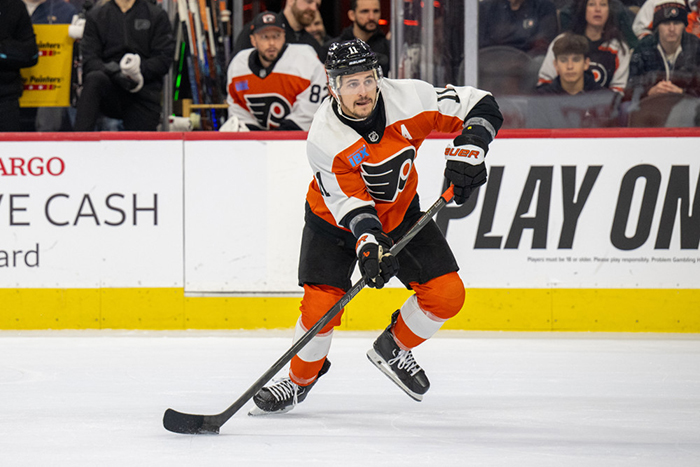
The Philadelphia Flyers have a GM-president combo, and it’s easy to see how they can run into problems. If there’s a big deal on the table and the two are at odds on it, they can stall and leave the offer on the table while another team swoops in. The good thing for the Flyers, at least for now, while they are rebuilding, is that GM Daniel Briere and Keith Jones are on the same page. It’s allowed them to restock the farm system and slowly put together a competitive team.
Briere and Jones have overlapping strengths. Another plus is when teams have a president who takes care of the business operations and the off-ice elements (notably, managing the owner or ownership group). Then, the GM is left to take care of the team. Taking this a step further, some NHL teams have a GM devoted to their American Hockey League (AHL) affiliate and the other amateur leagues to take some of the pressure off of the front office, or at the very least, provide a boots-on-the-ground perspective on the team that a GM often doesn’t have.
The Game Passing By Otherwise Successful GMs
Rutherford’s tenure with the Canucks makes it easy to forget his success in the past. He was hired by the Hartford Whalers in the late 1990s as they moved to Carolina to become the Hurricanes. He took a team that had minimal success in its history and led it to a Stanley Cup title in 2006. Rutherford then joined the Pittsburgh Penguins to build back-to-back Cup winners in 2016 and 2017.
Now he’s with the Canucks and doesn’t have the same impact. The game hasn’t passed him by, as he’s still proven he can make great trades. However, his age is reflected in how he operates. Rutherford won’t wait around to make a move and isn’t patient with a rebuild, which explains why he’s flipped first round selections he got in blockbuster deals for NHL-ready players. It’s why many Canucks fans wonder whether he’s the right GM to lead the rebuild.
This is the same issue the Devils and, later, the New York Islanders ran into with Lou Lamoriello. He was set in his ways and as old school as it got. It wasn’t a problem when the teams were winning, and he kept pushing to keep the team competitive but eventually, the Devils and Islanders started to decline, and he wasn’t willing to rebuild. It’s why Lamoriello was fired last season, and, at his age, it is unlikely to become a GM again (although with him, you never know).
Ultimately, Ownership Can Hold An Otherwise Great GM Back
The Sabres front office can only do so much when Terry Pegula is their owner. He’s held the team back for over a decade and has turned the team into the opposite of a destination. Players don’t want to sign with the Sabres, and coaches aren’t eager to go there either (which explains the re-hiring of Lindy Ruff).
A few teams have great GMs but the truth is they haven’t been the same team under new ownership. The Detroit Red Wings haven’t been the same since Mike Illitch passed away, and it’s one explanation for Steve Yzerman’s struggles despite plenty of success with the Tampa Bay Lightning. The Flyers haven’t been the same team since Ed Snider passed away, and they don’t have terrible ownership but they lack one willing to go the extra mile and spend extra on the team.
In the NHL, it’s hard for a great owner to have the same impact as in the previous eras, especially with a salary cap. It’s why great owners don’t win the Cup. However, a bad one can set a team back. Even in a salary cap league, there are ways to cut corners, and some teams do.
Rutherford was successful in multiple stops and, by all means, is a great hockey mind. His shortcomings with the Canucks reflect poorly on the ownership group, which hasn’t had a great run and built a franchise mired in mediocrity for the past decade (former Canucks now Flyers coach Rick Tocchet’s comments on the practice facilities or lack of them speak volumes).
The Future For Successful GMs
Looking ahead, GMs and front offices will be asked to know more than ever before. It’s not just drafting and developing; it’s about relationships, multiple branches of a front office, and processing more information than ever before. A great GM will not only know a lot about the games but also find ways to use everything thrown in their direction.
The other big thing is something that has been relevant since the early days of front offices and still applies today. Great GMs must be the ones making the decisions and calling the shots. They’ll have multiple voices in their heads but they are ultimately the ones making the decisions.

Home › Forums › General Managers Shortcomings On Display