The daily lead story on HockeyHotStove is powered by Benevolent Bakery, by SoShel beverages and by Smokiez vegan fruit choice, dedicated to quality and consumer education. Today’s topic: NHL final regular season week.

The return of the Stanley Cup Playoffs also means the return of the debate over the unpopular playoff format that puts some top teams for elimination early and also doesn’t really reward regular-season success.
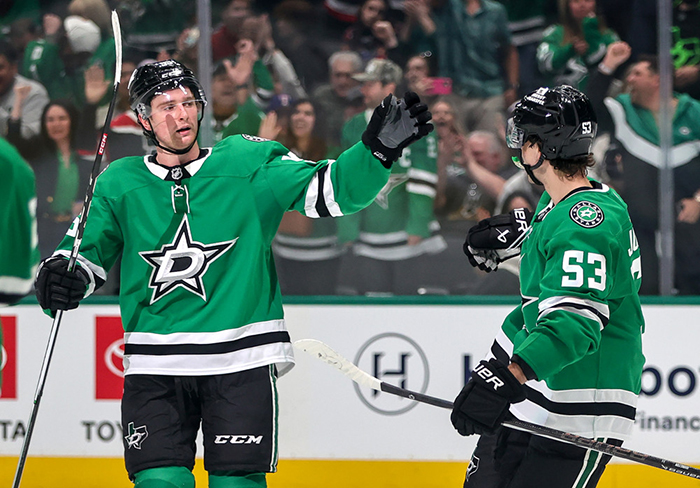
This year’s playoff matchups just illustrate what isn’t right with the current format, as the Dallas Stars, who finished with 112 points, face a Minnesota Wild team that collected 104 points, while the Edmonton Oilers, who collected just 93 – less than some teams that missed the Eastern Conference cut – face a team with just 92 points in the Anaheim Ducks.
‘The NHL is also guaranteeing that of the three top teams in the Western Conference, the Colorado Avalanche, Stars, and Wild, just one could reach the Western Final, meaning that series would have one of the top teams in the conference against some of the weakest to get in the postseason from the Pacific bracket.
Whoever wins that bracket will not see a 100-point team until the Western Conference Final, while the winner of the Stars-Wild series wouldn’t see a sub-100-point team until facing the Pacific winner in the third round.
But despite all its flaws – essentially the system baked in the worst of the divisional playoffs from the 1980s, which allowed some sub-par teams in the postseason, and the strange matchups created by the old conference format that followed it with seeding – the format isn’t going away any time soon.
With some new teams, there are howls from those markets about how unfair it is to certain teams, and they’re not wrong. But you can ask the Washington Capitals when they had to play the eventual Stanley Cup champion Pittsburgh Penguins in the second round despite winning the Presidents’ Trophy in back-to-back seasons, or the Toronto Maple Leafs in recent years who also had a juggernaut in their Atlantic Division bracket with Stanley Cup winners in the Tampa Bay Lightning and then the Florida Panthers blocking their door to the Eastern Conference Final.
Both those teams probably had a better shot dropping to the Wild Card and crossing over than winning their divisions, but the format front-loads the top matchups to the early rounds when more fans are paying attention, and leaves whatever is left for the conference finals.

The System Is Flawed
Flawed as it is, this format has been the standard since 2013-14, with the three top teams in each division along with a pair of Wild Cards in each conference. The NHL (and particularly its owners) like the rivalry element to sell tickets, especially when they can raise the prices since they no longer are required to pay the players directly in the postseason. Even when you have the Edmonton Oilers playing the Los Angeles Kings four years in a row (and narrowly missing the fifth straight this season on the last game of the campaign), the owners want a likely scenario where you are drawing in directly from a division rival rather than another conference opponent.
The other element is the bracket aspect of the playoff, with fixed matchups for each series, meaning you can do an NCAA basketball-style game without any chance of reseeding. The league likes the promotional aspect of the bracket and always teases promotions for it as the playoffs approach, and while the impact is unclear, it certainly seems to be a popular element of the Stanley Cup playoff format for the league itself.
Certainly the fairest determination of a true Stanley Cup champion would be the 1-16 format employed briefly in the early 1980s, and while that would create some strange East-West matchups in the early rounds and the possibility of two division rivals in the Stanley Cup Final as happened in 1980 with the Philadelphia Flyers and New York Islanders, the travel expenses for say, a Carolina Hurricanes-Anaheim Ducks first-round series, would not make the owners happy.
The 1-8 format is the popular alternative that is more palatable to owners, but even then, the old format rewarded the division winners, and in a case like this year’s Pacific, the Vegas Golden Knights would have ended up with the Utah Mammoth in the first round – just like the current format. A straight 1-8 certainly is a bit fairer, but the NHL also doesn’t want division titles to have zero meaning, so it’s likely some of the same flaws would be carried over.
But with the current format reaching a dozen years, it seems unlikely anything is going to change, as the mismatches have been noted over the past decade, with nothing done about it. If anything, the next format will likely mimic the NBA with play-in games, in which the last four teams in the playoff running play a short series to determine who makes it to the actual 16-team tournament, which has its own set of flaws.
Unfortunately for hockey fans, there seems to be little impetus for the NHL to change a flawed playoff format, and the debate will likely rage on for future teams to get discarded to the dustbin of history due to a much tougher playoff road than others.